

Embroidery Digitizing Services rely on more than simply converting artwork into a machine-readable embroidery file. One of the most important details they need is the design size. The size of an embroidery design affects stitch density, thread placement, stitch length, detail, fabric stability, and the final appearance of the embroidered product.
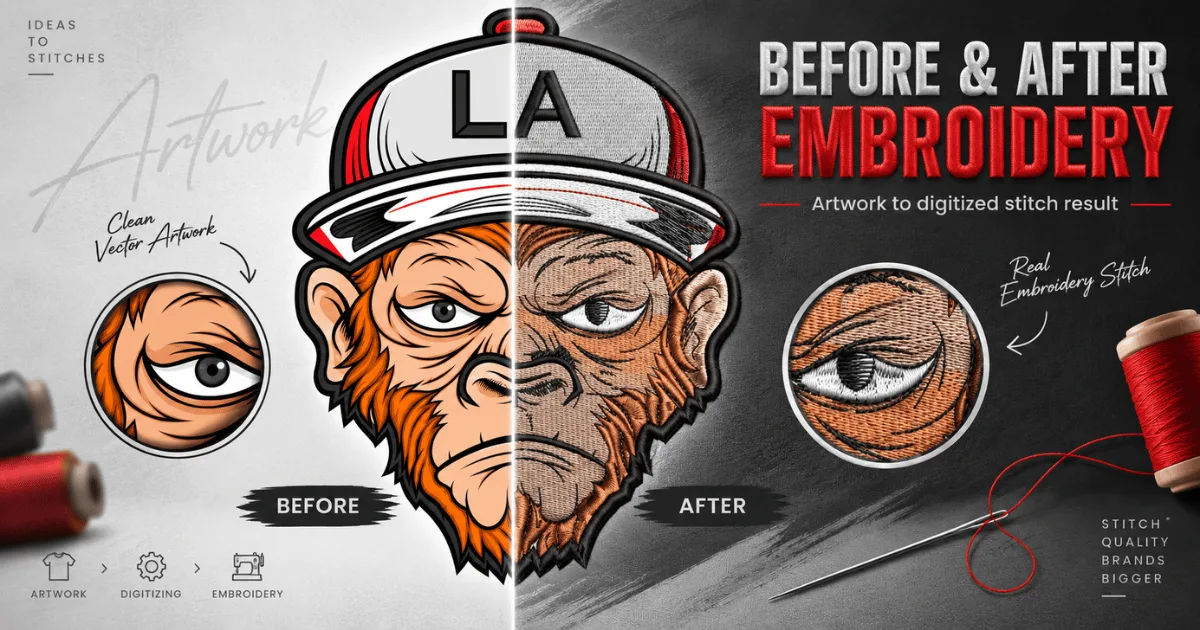
Whether you are preparing a logo for a shirt, jacket, cap, bag, patch, or other garment, providing the correct dimensions can make the digitizing process much more accurate. A design that looks excellent on a computer screen may not produce the same result when stitched at a different size.
Understanding why size matters can help businesses, designers, clothing manufacturers, and individuals get better embroidery results. This guide explains why design dimensions are important, how sizing affects digitizing, and what information should be provided before an embroidery design is created.
Why Does Design Size Matter in Embroidery?
Embroidery machines do not treat artwork like a normal digital image. They reproduce the design through thousands of individual stitches.
When the size changes, the relationship between those stitches also changes. A digitizer may need to adjust stitch density, underlay, stitch direction, column width, and other technical settings.
For example, a small logo may need simplified details because tiny letters or narrow shapes cannot be reproduced clearly. A larger version of the same logo may allow more details and different stitch settings.
This is why professional Embroidery Digitizing Services usually ask for the intended finished dimensions before beginning the digitizing process.
Size Determines Stitch Placement
The digitizer needs to know how large the design should appear on the finished product.
A 3-inch logo and a 10-inch logo cannot always use the exact same stitch structure. If the original design is digitized for one size and then dramatically enlarged, the stitches may become too widely spaced.
If it is reduced too much, stitches may overlap or create excessive density.
Size Affects Design Detail
Small embroidery designs have limited space.
Fine lines, tiny text, small gaps, and intricate patterns can disappear when the design is stitched at a small size. A digitizer may need to remove or modify certain details to preserve readability.
Larger designs generally provide more room for detail.
However, larger does not automatically mean better. Excessive size can also create problems such as high stitch counts, puckering, thread buildup, and fabric distortion.
What Happens If You Do Not Provide a Design Size?
A professional digitizer can sometimes determine a suitable size based on the artwork and intended application. However, making assumptions can lead to unnecessary revisions.
Suppose you send a company logo without explaining whether it will be used on a left chest, jacket back, cap front, or patch. Each application may require different dimensions and digitizing techniques.
The digitizer may create a technically correct file, but it might not match your actual production requirements.
This is why communicating the final dimensions is an important part of working with Embroidery Digitizing Services.
The Design May Need to Be Reworked
If the final size changes significantly after digitizing, the file may need additional editing.
A digitized design is not simply a picture that can always be resized without consequences. The stitch structure has been specifically created for particular dimensions.
A substantial size change can require recalculating stitch density, adjusting underlay, changing stitch types, and modifying small details.
The Stitch Count Can Change
Design size can influence stitch count.
Increasing the dimensions of a design may require additional stitches to cover larger areas. Reducing the size may require fewer stitches, but simply scaling everything down can result in poor coverage.
Professional digitizers understand these relationships and make technical adjustments rather than relying only on automatic scaling.
How Design Size Affects Different Embroidery Applications
The ideal size depends heavily on where the embroidery will be placed.
Different garments and products have different available spaces, fabric structures, and practical requirements.
Left-Chest Logos
Left-chest logos are commonly used on uniforms, corporate shirts, polo shirts, and workwear.
These designs are usually relatively compact. Because the available area is limited, text and small details need to be carefully considered.
A digitizer may simplify very fine elements so the logo remains clean and readable.
Jacket Back Designs
Back embroidery generally provides much more space.
A company name, sports design, club logo, or decorative artwork can be produced at a larger size. More details may be possible because the design has additional room.
However, large designs also require careful consideration of stitch count and fabric stability.
Cap Embroidery
Caps present a special challenge.
The curved surface and limited embroidery area can make detailed designs difficult to reproduce. Small text and narrow elements may need modification.
The design size must account for the available front panel and the direction in which the machine will stitch.
Experienced Embroidery Digitizing Services consider the cap's structure when preparing the design rather than treating it like a flat garment.
Embroidered Patches
Patches can be produced in various sizes.
A small patch may require simplified artwork, while a larger patch can accommodate more details. The border also needs enough space to create a clean and durable edge.
The intended patch dimensions should therefore be communicated before digitizing.
Bags and Accessories
Tote bags, backpacks, hats, towels, and other accessories can have different embroidery requirements.
The available embroidery area, material thickness, and surface flexibility all influence the appropriate design size.
Providing these details allows the digitizer to prepare a more suitable file.
Does the Original Artwork Size Matter?
Yes, but it is not always the most important measurement.
A designer might provide a logo that is 2,000 pixels wide, for example. That tells the digitizer something about the digital artwork, but it does not necessarily communicate the desired physical embroidery dimensions.
Embroidery is measured in physical dimensions such as inches or millimeters.
For example, instead of saying that a logo should be "large," it is much better to specify that the finished design should be approximately 4 inches wide.
Physical Size Is More Important Than Pixel Dimensions
Pixel dimensions are relevant for digital graphics, but embroidery machines work with stitch coordinates.
A high-resolution image can still be unsuitable for embroidery if the intended physical size is not clear.
When ordering Embroidery Digitizing Services, provide the expected width and height whenever possible.
Should You Provide Both Width and Height?
Ideally, yes.
Providing both measurements gives the digitizer a clear understanding of the intended proportions.
For a design that must maintain its original proportions, you may provide one measurement and state that the other dimension should scale proportionally.
For example, you could specify:
- Width: 4 inches
- Height: proportional
This tells the digitizer not to stretch the artwork.
Avoid Unnecessary Stretching
Embroidery designs should generally maintain their intended proportions.
Stretching a circular logo into an oval or compressing lettering can change the appearance of the original artwork.
If different versions of a design are needed, it is better to explain the intended dimensions and applications separately.
Why One Digitized File May Not Work for Every Size
One of the biggest misunderstandings about embroidery is that a single file can always be resized freely.
While embroidery files can sometimes be scaled within a limited range, significant resizing can affect quality.
A design digitized specifically for a small chest logo may not work properly when enlarged for the back of a jacket.
Likewise, a detailed jacket-back design may contain elements that become unreadable when reduced for a cap.
For this reason, professional Embroidery Digitizing Services may recommend creating separate versions of a design for different applications.
What Is Considered a Significant Size Change?
There is no universal percentage that applies to every design.
The acceptable range depends on the design's complexity, stitch types, lettering, fabric, and intended application.
A simple shape may tolerate some resizing better than an intricate logo containing small text.
The more detailed the design, the more carefully resizing should be handled.
Small Text Requires Special Attention
Text is one of the first elements to suffer when a design becomes too small.
Letters need sufficient height and appropriate stitch structure to remain readable. If lettering is reduced excessively, individual stitches may not provide enough visual definition.
A digitizer may recommend increasing the text size or selecting a more embroidery-friendly font.
How Fabric Influences the Required Design Size
Design size cannot be considered separately from fabric.
A stable material, such as a structured jacket, may support a larger embroidered design more easily than a lightweight, stretchy shirt.
Stretchy fabrics can move during stitching, which can contribute to distortion.
The digitizer may compensate through appropriate underlay and stitch settings, but choosing a practical design size remains important.
Thin Fabrics
Lightweight fabrics often require careful control of stitch density.
A very dense, oversized design can place excessive stress on the fabric and cause puckering.
Heavy Fabrics
Thicker materials may support more substantial embroidery, although needle penetration, stitch count, and thread buildup still need to be considered.
The best Embroidery Digitizing Services take the material into account rather than using identical settings for every project.
How to Communicate Design Size to a Digitizer
Clear communication can prevent many production problems.
When submitting artwork, provide as much useful information as possible.
Include:
- Desired finished width
- Desired finished height
- Embroidery placement
- Garment or product type
- Fabric type, if known
- Whether proportions must remain unchanged
- Any important text or fine details
- Thread color requirements
- Whether multiple sizes are needed
This information gives the digitizer a practical production target.
Provide a Reference Mockup
A mockup can also help.
For example, if you want a logo on the left chest of a polo shirt, a simple visual showing the approximate placement can clarify your expectations.
The mockup does not replace exact measurements, but it provides useful context.
Can Automatic Digitizing Software Determine the Size?
Automatic digitizing software can assist with certain tasks, but it does not eliminate the importance of design size.
Software can convert artwork into embroidery-related data, but professional results often require human judgment.
A skilled digitizer evaluates how shapes, letters, borders, fills, and stitch directions will behave at the intended dimensions.
Automatic conversion may produce a file that technically runs on a machine but does not necessarily produce a high-quality finished product.
What Should You Do If You Need Multiple Sizes?
If the same logo will appear on different products, tell the digitizer at the beginning.
For example, a business might need:
- A small version for shirts
- A medium version for jackets
- A larger version for uniforms
- A compact version for caps
Instead of resizing one file repeatedly, the digitizer can create appropriately adjusted versions.
This approach can improve consistency across different products.
Professional Embroidery Digitizing Services can determine which elements need modification at each size while maintaining the overall identity of the artwork.
Does Design Size Affect Cost?
It can.
Pricing varies between providers, but complexity, stitch count, number of color changes, detail level, and digitizing time can all affect cost.
A large and highly detailed design may require considerably more work than a small, simple logo.
However, size alone does not determine the price.
A tiny design containing complicated lettering may require more technical attention than a larger design made from simple shapes.
Common Mistakes When Providing Embroidery Artwork
Several mistakes can make the digitizing process more difficult.
Sending Only a Low-Quality Image
A blurry image can make it difficult to identify small details.
Whenever possible, provide clean, high-quality artwork.
Not Specifying the Application
A digitizer needs to know whether the design is intended for a cap, shirt, jacket, bag, or patch.
The same artwork can require different approaches depending on the application.
Assuming Any Size Will Work
Do not assume that a design created for one product can automatically be used everywhere.
Large changes in dimensions can affect stitch quality.
Ignoring Small Text
If your logo contains small words, tell the digitizer whether they must remain readable.
Sometimes a small modification to the artwork can produce a much better embroidered result.
Best Practices for Getting High-Quality Digitizing
Before sending your artwork to Embroidery Digitizing Services, establish the final requirements.
First, decide where the embroidery will be placed.
Next, measure the available area and determine the desired finished dimensions.
Then, provide clean artwork and explain any details that are especially important.
If the design will be used on several products, provide the dimensions for each application.
It is also useful to request a preview or sample stitch-out when the design is particularly complex or important.
Test the Design Before Mass Production
A test stitch-out can reveal problems that are difficult to identify on a computer screen.
You may discover that small text is difficult to read, a particular color does not provide enough contrast, or the design is too dense for the selected fabric.
Making adjustments before producing hundreds of garments can save both time and money.
Questions to Ask an Embroidery Digitizing Provider
Before choosing a provider, ask how they handle sizing.
Useful questions include:
- Can you digitize the design for a specific physical size?
- Will you adjust the stitch settings for different sizes?
- Can you create separate files for caps and garments?
- Do you provide a stitch preview?
- Can you recommend a minimum size for small text?
- Do you test complex designs before production?
- Can you adjust the file for different fabric types?
The answers can help you determine whether the provider understands the technical side of embroidery.
Conclusion
So, do Embroidery Digitizing Services need design size? In most professional projects, the answer is yes. The intended physical dimensions provide an important foundation for creating an accurate and production-ready embroidery file.
Design size affects stitch density, detail, lettering, stitch count, fabric behavior, and overall appearance. A file designed for a small shirt logo may not perform well when enlarged for a jacket, while a detailed large design may lose important elements when reduced.
Providing exact measurements helps the digitizer make better technical decisions from the beginning. It also reduces the need for revisions and makes it easier to achieve consistent results across different garments and products.
For the best outcome, provide the desired width and height, embroidery placement, fabric information, and intended application. If you need multiple sizes, communicate that before digitizing begins.
Ultimately, successful embroidery is a combination of good artwork, accurate sizing, appropriate digitizing, suitable fabric, and careful machine production. When these elements work together, the final embroidered design can look sharp, balanced, durable, and professional.